


.webp)
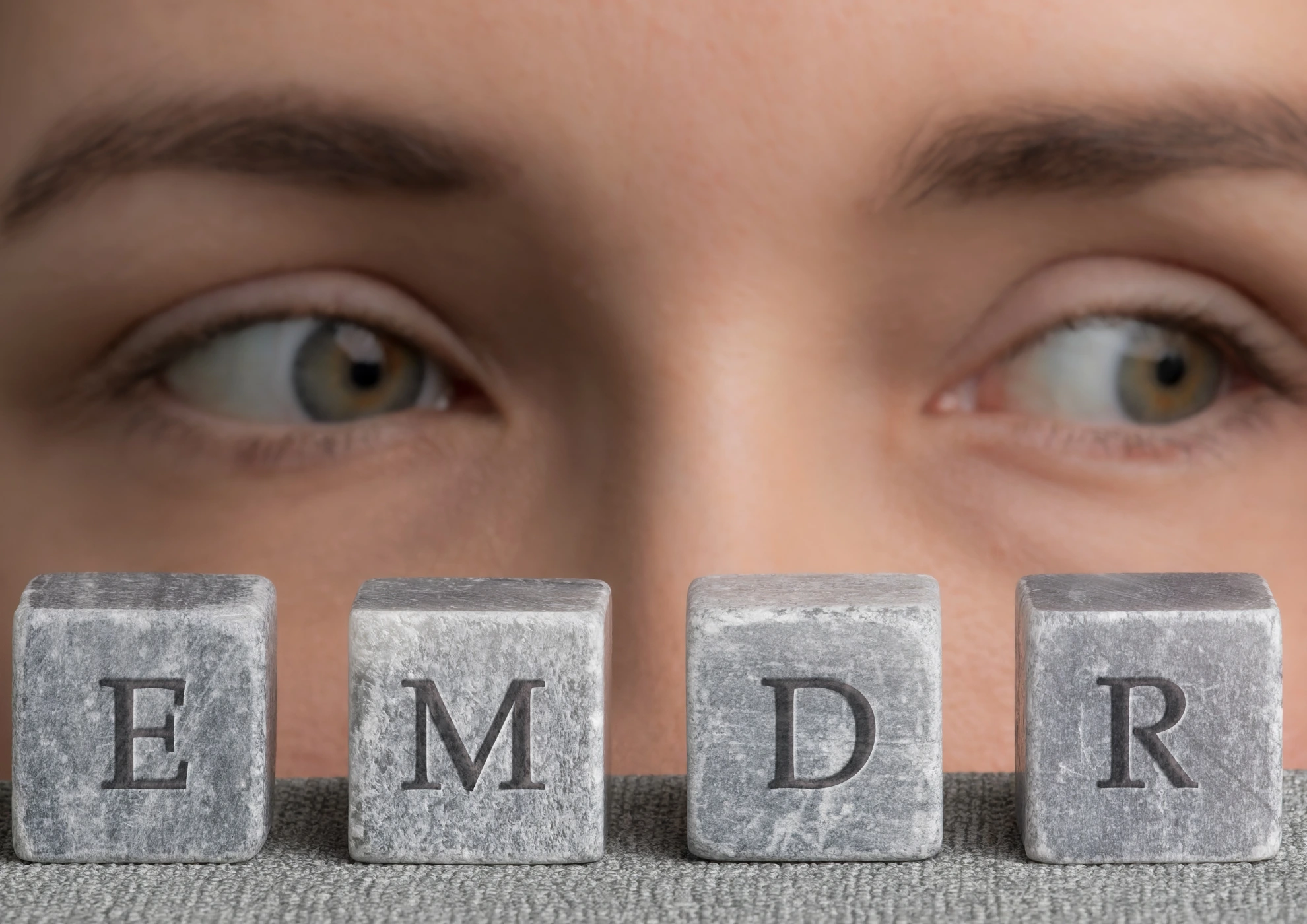
Have you ever noticed yourself reacting strongly to something in the present in a way that didn’t quite match what was happening? Maybe your partner is in a bad mood, and you instantly get a pit in your stomach, thinking, “It must be my fault” even though there’s no real reason. Or perhaps you freeze when anyone offers you a compliment, unsure how to take it. You might even be watching TV and suddenly feel pulled back to an old experience, as if it’s happening all over again. These reactions often have less to do with what’s happening now and much more to do with memories or emotions from the past that were never fully processed at the time. Perhaps EMDR might be helpful?
EMDR (Eye Movement Desensitisation and Reprocessing) is an evidence-based therapy designed to help people process and recover from traumatic or distressing experiences.
EMDR is widely used in the treatment of trauma and PTSD, and is recommended internationally as a first-line treatment for post-traumatic stress.
What Is EMDR?
EMDR stands for Eye Movement Desensitisation and Reprocessing. It is a structured psychological therapy developed by Francine Shapiro in the late 1980s to help people recover from trauma.
Unlike traditional talk therapy, EMDR does not require you to describe traumatic events in detail for long periods. Instead, it focuses on helping the brain reprocess distressing memories so they become less emotionally overwhelming.
EMDR is recognised as an effective treatment for PTSD and trauma by major international health organisations and is widely used in Australia.
How Does EMDR Work?
Traumatic experiences can sometimes become “stuck” in the nervous system.
When this happens, reminders of the event can trigger:
- Intense emotional reactions
- Physical distress
- Intrusive memories
- Nightmares
- Avoidance behaviours
EMDR uses bilateral stimulation (such as guided eye movements, tapping, or auditory tones) while you briefly focus on aspects of the memory.
This process helps the brain:
- Reprocess the memory
- Reduce emotional intensity
- Integrate the experience in a more adaptive way
Over time, the memory feels less distressing and less triggering.
Many clients describe the memory as feeling “further away” or less charged after successful EMDR processing.
What Can EMDR Help With?
EMDR is best known for treating trauma, but it can also help with a range of concerns, including:
- Post-traumatic stress disorder (PTSD)
- Childhood trauma
- Sexual assault or abuse
- Family violence
- Medical trauma
- Workplace trauma
- Anxiety linked to past experiences
- Phobias
- Distressing memories
- Addictions
- OCD
- Grief and loss
It may also be helpful for neurodivergent clients who have experienced trauma, provided therapy is tailored appropriately and delivered in a neuroaffirming way.
What Happens in EMDR Therapy (and after)?
People experience EMDR differently, and it’s completely normal to feel unsure or nervous at first. A very common question is “am I doing this right?” Or, “what should I be thinking of?” when new to EMDR. It’s helpful to remember that every brain has the innate capacity to make new connections and to heal (thanks to neuroplasticity!) If you can, try to let go of what you think “should” be happening.
EMDR follows a structured, phased approach.
1. Assessment and Preparation
Your psychologist will:
- Take a detailed history
- Understand your goals
- Teach stabilisation and coping strategies
- Ensure EMDR is appropriate for you
This preparation phase is essential. EMDR is not rushed.
2. Processing
You will:
- Briefly bring a distressing memory to mind
- Notice thoughts, emotions and body sensations
- Engage in bilateral stimulation (eye movements or tapping)
During this phase some people notice vivid images and emotional shifts; others mainly notice body sensations or changes in perspective. Processing can feel quite demanding. Your psychologist will guide you throughout. You remain in control at all times.
3. Integration
The aim is for the memory to feel less distressing and for more adaptive beliefs (e.g., “I am safe now”) to feel true.
EMDR should feel collaborative and empowering. You’re always allowed to pause, slow down, or change direction, and your therapist’s job is to help you stay within what feels manageable. If you feel more unsettled between sessions than you expected, let your therapist know. This is common, and it’s a sign that you may need more stabilisation, gentler pacing, or extra support between appointments.
Common experiences following an EMDR session include:
- Between-session processing: new memories, insights, or emotions may surface later.
- Dream changes: some people notice vivid dreams or disrupted sleep for a short period.
- Body sensations: heaviness, lightness, tightness, or release can show up as your nervous system settles.
- A “lighter” memory: you may remember the event but with less charge, or it may feel further away.
Is EMDR Safe?
When delivered by a properly trained psychologist, EMDR is considered safe and effective.
It is important that:
- You work with a clinician trained in EMDR
- Adequate preparation is completed
- Therapy proceeds at a pace that feels manageable
EMDR can temporarily bring up strong emotions, which is why it should only be undertaken with an appropriately trained mental health professional.
How Many Sessions Does EMDR Take?
This varies depending on:
- The nature of the trauma
- Whether there are single or multiple traumatic events
- Current supports and coping capacity
Some single-incident traumas may resolve relatively quickly. Complex trauma may require longer-term work.
Your psychologist will discuss an individualised treatment plan with you.
EMDR Therapy in Melbourne and Geelong
At Q Psychology, EMDR is offered by trained psychologists in:
- Melbourne (Carlton)
- Melbourne (St Kilda)
- Geelong
If you’re considering EMDR, we recommend booking an initial appointment to discuss whether it’s appropriate for your situation. EMDR be offered via Telehealth for many people. In online sessions, your therapist may use on-screen eye movements, guided self-tapping, sounds through your headphones, or other forms of left–right stimulation, and will help you set up a comfortable, private space so you feel supported.
Frequently Asked Questions
Do I have to talk in detail about what happened?
No. Unlike some trauma therapies, EMDR does not require you to describe events in graphic detail. You only need to briefly activate the memory while engaging in bilateral stimulation.
Will EMDR make things worse?
It is normal to experience temporary increases in emotion while processing trauma. However, EMDR should feel contained and manageable when delivered properly. Preparation and pacing are key.
Is EMDR covered by a Mental Health Care Plan?
Yes. If you have a valid GP Mental Health Care Plan, EMDR sessions can be claimed under Medicare in the same way as other psychology sessions.
Can EMDR be used with neurodivergent clients?
Yes, when adapted appropriately. A neuroaffirming approach is important, and therapy should be tailored to sensory needs and processing styles.
---
This article is general information and isn’t a substitute for personalised mental health advice.
If you require immediate support, the following crisis lines are available:
- Blue-knot phone support for survivors of complex trauma: 1300 657 380 (9am-5pm) AEST/AEDT 7 day
- LifeLine crisis support 13 11 14 (24/7)
- Q-life 1800 184 527 (3pm-9pm)
Co-authored by Dr. Elmie Janse van Rensburg (clinical psychologist) and Rene Pirrotta (senior psychologist)
.webp)
%20(1).webp)
.png)
.webp)
.webp)